
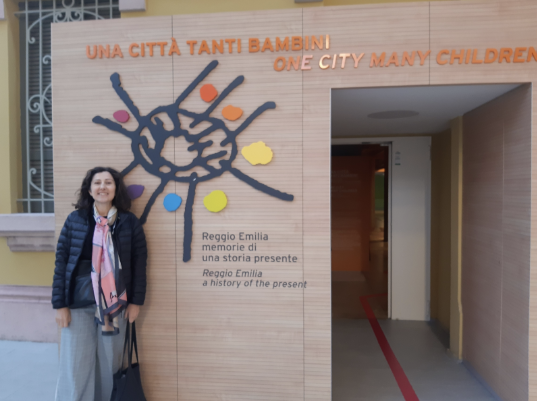
By Tania Sangiorgio (AGECS Fellow 2021)
As an early childhood teacher for the past 27 years, I always had a passion and desire to visit the Reggio Emilia kindergartens, particularly to understand how they embed the whole food culture into their program. This study tour was supported by the AGECS Fellowship Program for Leadership and Change, which funded the entirety of the international study tour expenses. Without the support from AGECS, it would have been financially impossible for me to attend. I have been a member of the Association of Graduates in Early Childhood Studies for years, and it was following this lockdown research time that I was inspired to write a project brief on why I wanted to go to Reggio Emilia and how I could transfer this knowledge to other teachers.
My study tour started on the 14th November 2022, and concluded on the 18th November 2022. We followed a particular schedule, and each day had a packed itinerary from 9.30am to 6.30pm.
Every morning all 270 study tour participants met at the Loris Malaguzzi International Centre and listened to lectures delivered by the Pedagogistas (the early childhood teachers), including the values and educational projects of the preschools within the Infant-Toddler Centres of Reggio Emilia. After each lecture and morning and afternoon breaks, teachers could socialise and plenty of opportunities to networks from colleagues around the world. It was very community based, and very “Italian” – and the networking and opportunities to exchange emails to colleagues was truly amazing. I have now networked with teachers from Ireland and Armenia!
Continuing with the packed schedule, daily from 4.00pm to 6.30pm we visited the infant-toddler centres (0-3) and preschools (3-6). Some Covid-19 restrictions were still being enforced, so we were allocated upon registration to specific infant-toddler centres and preschools and to particular groups of study tour participants. Shuttle buses arrived at Loris Malaguzzi International Centre in Reggio Emilia to transport us. Whilst arriving at each service, we were immersed in the infant and preschool’s history and stayed until close. Participants could ask questions and interpreters were translating to and from English. I was lucky that I could speak in Italian – and was able to talk to the cooks directly.
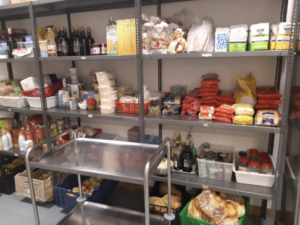
My objective of the project was to investigate the importance of fresh healthy food into the daily kindergarten program. My interest in the food aspect of Reggio Emilia, comes from my own rich Italian heritage and a love of cooking healthy foods in preschools over my 27- year teaching career. I’m fascinated by the role of harvesting and how Reggio Emilia’s preschools use food in their early childhood curriculum.
The cooks provide fresh healthy recipes each day, and in the longer term there are food projects for the children to be immersed in. What I was able to witness was limited, as although the study tours had reopened, there were many restrictions in the wake of Covid-19. From what we were told, there are two main ways the cooks and teachers use food as a tool.
In Reggio Emilia, the children pass by the kitchen first and make a choice of food to have during the day. Each centre in Reggio Emilia employs two cooks, and their role in the educational environment and with children is embedded. Some of the ways in which this occurs includes children exploring and helping to maintain the garden, studying the environment, and collecting vegetables and fruit for meals and snacks. They are encouraged to approach the cooks to ask what is on the menu for lunch.
Indeed, the cook has an important role in the Reggio Emilia education system in exploring the fruits and vegetables with the children. Food can be a daily connection with life, with small children, for example leaves of vegetables that are left over are used in their play, for example, they are added to the pasting table for children to explore and experiment with in their art. Waste management is taught using left-over vegetables from cooking being blended into soup for a subsequent meal. These are just two examples of the ways that these practices are embedded in the approach.
In my reflections, the whole international tour was rich and rewarding in both a professional and personal sense. One thing I wish I knew before I left was that photo opportunities were restricted. However, I was able to get a small number of photos after I spoke Italian with some of the staff, which I have shared in this article.
Thank you again to the AGECS Fellowship Program for Leadership and Change which has inspired me to adopt these practices in my 3- and 4-year-old programming.
This article was originally published in AUDAX Autumn 2024.